


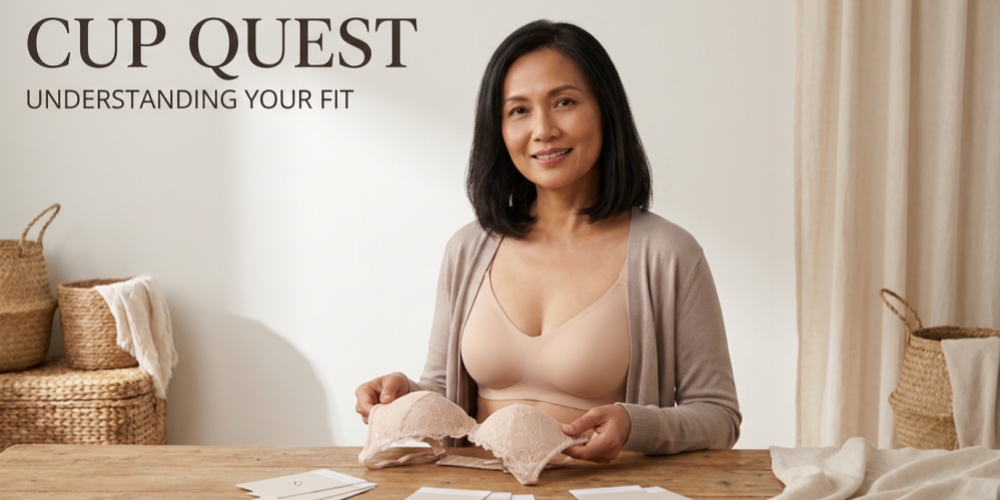
Which Bra Is Best for Sagging Breasts or Older Women? A Practical No-Hard-Sell Guide
Here is the direct answer: there is no single “perfect bra” for sagging breasts or older women. The best option usually depends on support level, coverage, strap design, band stability, and how the bra feels after hours of wear. Some women do best in soft everyday lift. Others need fuller coverage, steadier shaping, or a smoother silhouette under clothes. This guide keeps the advice practical, not pushy, so you can decide what actually suits your body and daily life.
What “sagging” usually means in real life
Most women are not looking for a dramatic medical definition when they search for an anti-sagging bra. They are usually describing a few everyday experiences:
- The bust feels lower or less supported than before.
- Soft tissue moves more during walking, stairs, or daily activity.
- Lighter bras no longer feel secure enough.
- The top of the cup feels empty in some bras, while the lower part still feels heavy.
- Clothes do not sit the way they used to, especially around the chest line.
This can happen for many ordinary reasons: age, pregnancy history, breastfeeding history, weight shifts, hormonal changes, or simply the natural way breast tissue changes over time. The key point is not to “fight age” with marketing language. It is to choose a bra that gives you the kind of support and comfort your body now prefers.
Useful reframe: for most women, the goal is not “making the bust look younger.” It is getting a bra that feels more stable, more comfortable, and more flattering in real daily wear.
Which bra is perfect for sagging breasts?
There usually is no one perfect bra, but there is a better feature set. If you want a bra that works well for softer tissue or a bust that sits lower than before, look less at marketing slogans and more at construction details.
Fuller cups often feel calmer, more secure, and less “spilly” than low-coverage bras when the tissue is softer or heavier.
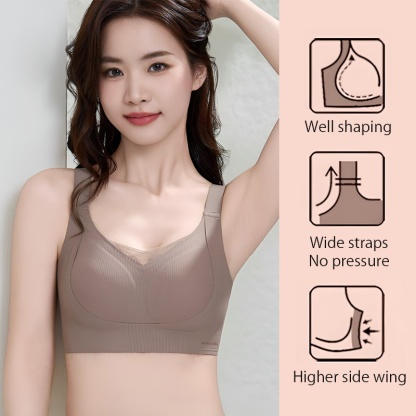
Broader straps often feel better over long hours because they spread pressure more evenly and do not dig in as quickly.
A supportive bra should anchor from the band, not ask the shoulders to do all the work.
These can help smooth the side area and create a more contained, centered feel under clothing.
If a bra looks very minimal, feels extremely thin, or seems to rely on stretch alone, it may still be comfortable for some women—but it is not automatically the best answer for softer or fuller tissue. That is why “most comfortable” and “best support” are related, but not identical.
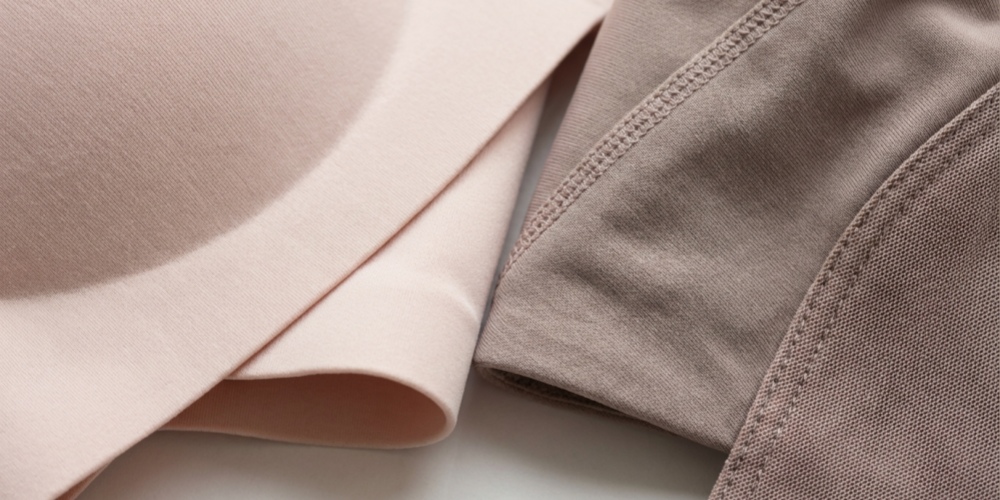
Best bra features to look for
1. Full or fuller coverage
When tissue has softened or sits lower, a fuller cup usually feels more reassuring than a shallow, low-cut cup. It helps reduce constant readjusting and often creates a more even shape under tops.
2. Wide, comfortable straps
Older women often care less about tiny pretty straps and more about whether the bra stays comfortable after lunch, errands, and a full workday. Wider straps can be a small detail with a big comfort payoff.
3. A band that stays level
A bra that rides up in back usually is not giving stable support. This matters even more when comfort and lift are both priorities. Good support starts around the body, not just at the shoulders.
4. Smoother side coverage
Many women describing “sagging” are also reacting to side-spread, back bulges, or the way soft tissue sits near the arm area. Higher side wings or smoothing side panels can make a bra feel more secure and look more polished under clothing.
5. Enough structure for your actual support need
This is the part worth saying clearly: not everyone is suited to super-light bras. If you prefer very soft support, that is fine. But if you routinely want more hold, choosing a slightly more structured anti-sagging or minimizer style may reduce daily discomfort more than forcing yourself into a barely-there bra that never feels stable.
For older women: comfort points that matter most
When women search for the most comfortable bra for an older woman, they are usually not asking for something “old.” They are asking for something that feels easier to live in.
- Less shoulder pressure from wider straps and balanced support.
- Less rubbing from smoother edges and softer fabric contact.
- Less adjusting because the band and cups stay in place better.
- Less visible strain under clothes because the shape feels more centered and supported.
- Less daily burden because the bra feels calm rather than demanding.
For many older women, comfort is not simply softness. It is stable softness. A bra can be very soft and still feel annoying if it shifts, flattens in the wrong place, or leaves the bust unsupported by mid-afternoon. The most comfortable bra is often the bra that needs the least ongoing correction from you.
Comfort tip worth remembering: a bra that feels slightly more supportive at first can sometimes become the more comfortable option over a whole day if it moves less and asks less from your shoulders.
The 2-finger rule for bras, explained properly
The 2 finger rule for bras is often repeated online, but it gets simplified too much. It is not a magic test for fit. It is only a quick comfort check.
| Area | What the 2-finger idea suggests | What it does not prove |
|---|---|---|
| Band | You should usually be able to slide about two fingers under the band without pain. | It does not mean the band is perfect if it still rides up or shifts. |
| Straps | You should usually get two fingers under the straps without them cutting in hard. | It does not mean the straps are set correctly if the cups or band are wrong. |
So the real meaning is simple: the bra should feel secure, but not crushing. If you cannot slide fingers under at all, the fit may be too tight. If you can pull the band far away or the straps feel loose and lazy, the fit may be too loose.
But the 2-finger rule should never override what the bra is actually doing on the body. A level band, supported cups, and straps that are helping—not overworking—matter more than any single quick test.
Need to check your size before choosing support level?
How to Measure Bra Cup Size at Home
What 34B, 36B, 34C, 38B and 75B Really Mean
Are seamless bras better for posture?
Not automatically. This is one of the biggest places where bra marketing can oversimplify things.
A bra can help you feel more supported, more centered, and less weighed down. A bra with a stable band, supportive cups, wider straps, and balanced construction may also make your upper body feel easier to hold comfortably through the day. That can create a more open, upright feeling.
But a bra does not replace your back muscles, shoulder habits, movement patterns, or general posture. A seamless bra is not “better for posture” just because it is seamless. What matters more is whether the bra gives enough lift and stability for your body without discomfort.
If you are specifically comparing seamless vs more structured daily bras, it is better to ask:
- Does this bra keep the bust feeling secure?
- Does the band stay level?
- Do the straps feel calm rather than heavy?
- Do I feel more comfortable at the end of the day than the start?
That is usually a better real-life measure than broad posture claims.
Related read: Can I Wear a Seamless Bra Every Day?
Best picks by need
If you are choosing by feel rather than by hype, this is the cleanest way to shop. Start with the problem you want solved first.
A seasonal browse before the product picks
If you already know you want a more supportive daily rotation, this is a good point to browse VEIMIA’s current spring offers before narrowing down to a single anti-sagging style.
These picks are arranged by need, not by marketing intensity. That usually leads to a better purchase than trying to find one bra that promises everything at once.
VEIMIA Corrective Anti-sagging Bra
A strong starting point if you want lift that still feels gentle enough for daily wear. This is a good match for women who want more stability than a light bra gives, but do not want to jump straight into something that feels rigid or overbuilt.
Best for everyday wear when your goal is a calmer, more supported chest line with less shoulder pressure.
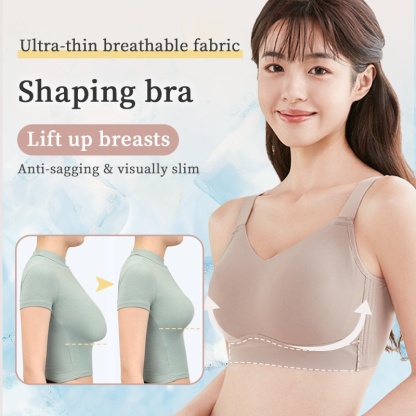
VEIMIA Seamless Minimizer Bra
A better fit when you want stronger shaping logic, less wobble, and a smoother line under clothing. This is especially useful if softer tissue, fuller volume, or fitted tops make lighter bras feel too exposed or too mobile.
Best for women who want anti-sagging support that still feels wearable in daily life, not just supportive in theory.
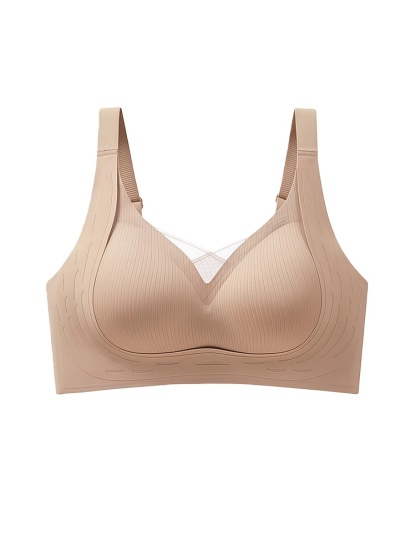
VEIMIA Supportive Anti-sagging Bra
If your priority is easy all-day comfort with a more supported feel, this is the cleanest choice here. It makes sense for women who want a wireless bra, but still need natural lift and a more stable rounded shape than ultra-light bras usually provide.
Best for older women or daily wearers who want comfort first, but not at the cost of feeling unsupported.

VEIMIA Refined Minimizer Bra
A polished option when your goal is not only support, but also a cleaner finish under tops and dresses. This is the one to consider when you want shaping, coverage, and a smoother visual result without moving into something that feels too heavy.
Best for daily outfits where you want the bust to feel supported and the clothing line to look quieter.
Want to compare more anti-sagging options before choosing?
If you are still deciding between gentler daily lift and stronger shaping support, it often helps to browse the whole category side by side instead of overcommitting to the first product page.
FAQ
Which bra is perfect for sagging breasts?
What is the most comfortable bra for an older woman?
Are seamless bras better for posture?
What is the 2 finger rule for bras?
Should older women avoid very thin bras?
Is wireless better for sagging breasts?
Can an anti-sagging bra make breasts look more lifted under clothes?
What matters more: comfort or support?
Continue reading:
How to Measure Bra Cup Size at Home
What 34B, 36B, 34C, 38B and 75B Really Mean
Can I Wear a Seamless Bra Every Day?
Shop All Anti-sagging Bras