

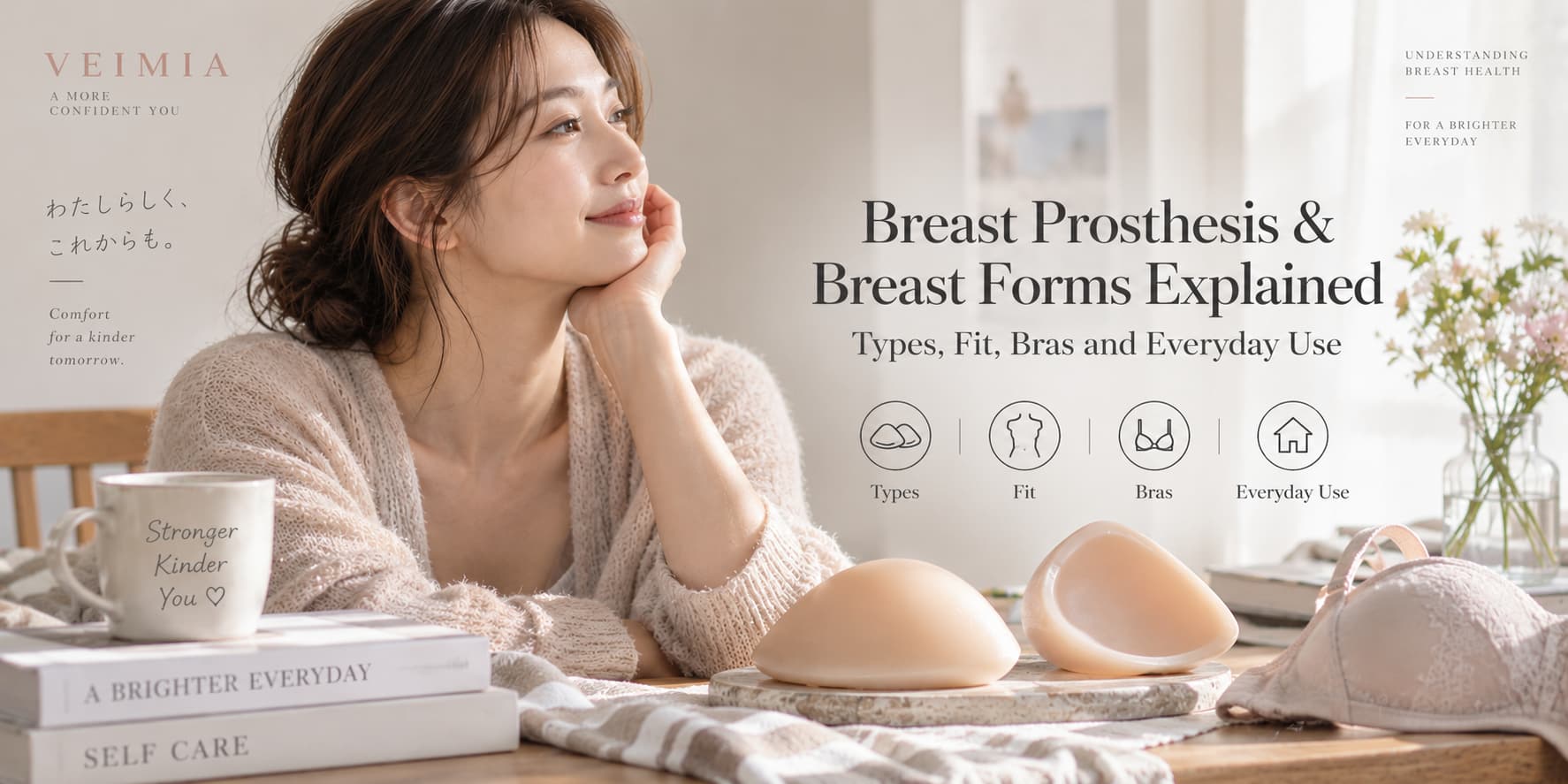
Breast Prosthesis & Breast Forms Explained: Types, Fit, Bras and Everyday Use
A breast prosthesis—also called a breast form—is an external shape worn after breast surgery when someone wants to create all or part of a breast contour under clothing. Breast forms come in different shapes, materials, weights and styles, and the best fit depends on the body, clothing and everyday preferences of the person wearing one.
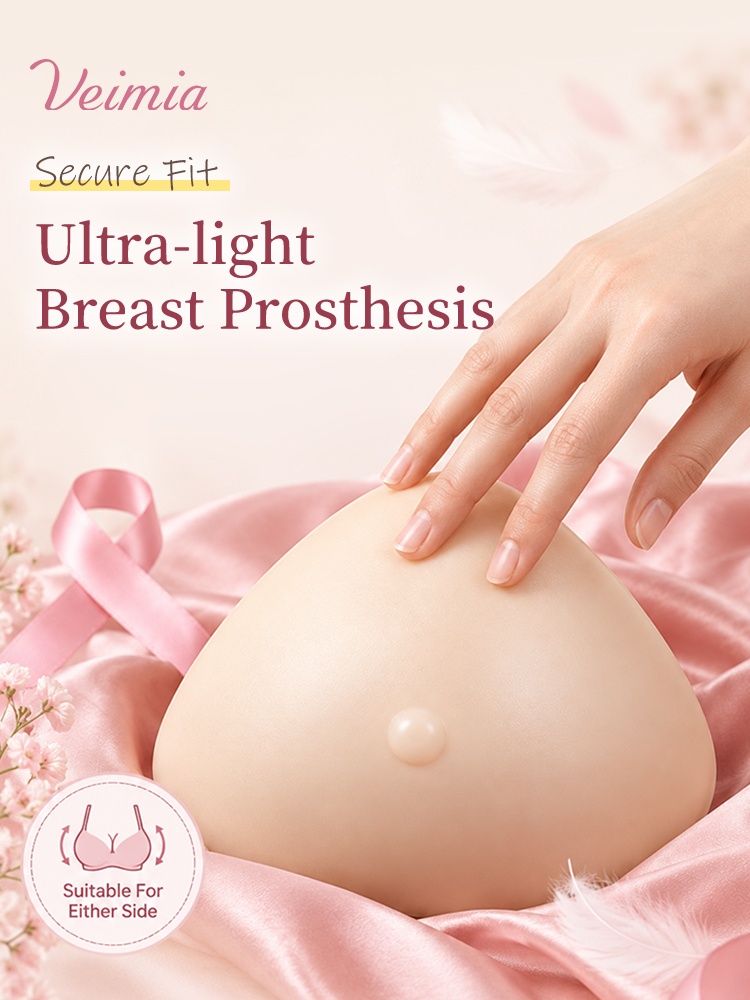
A breast prosthesis is an artificial breast form that replaces the external shape of all or part of breast tissue that has been removed.
In everyday breast-care language, breast prosthesis and breast form usually refer to the same external item. It may be worn inside a bra or other supportive garment. A breast prosthesis is different from a breast implant, which is placed inside the body through surgery.
Breast forms can be full or partial, silicone or lighter-weight, temporary or intended for longer-term use. Wearing one is optional.
The phrase “breast prosthesis” sounds medical, but the object itself often becomes part of a very ordinary routine.
It may sit beside a bra in a drawer. It may be worn to work, to dinner or under a favourite shirt. Someone may use it every day, only with certain outfits, or for a period of time while deciding what feels right after surgery.
Understanding the different types helps because there is no single breast form that works for every person, every surgery or every wardrobe.
Shape matters. Weight matters. How the back of the form sits against the chest matters. So does the bra, the fabric of the clothing over it, the climate, daily activity and personal preference.
What Is a Breast Prosthesis?
A breast prosthesis is an external breast form designed to replace the visible shape of all or part of a breast after tissue has been removed.
It is most commonly discussed after mastectomy, but partial forms can also be useful after breast-conserving surgery or when there is a difference in breast volume that someone wants to balance under clothing.
The form itself does not become part of the body. Unlike a breast implant, it can be put on and taken off.
That flexibility is one reason some people choose a breast form instead of reconstruction—or use one while considering whether they want reconstruction later.
Other people prefer to go flat and never use one.
A breast prosthesis creates external breast shape. It does not define what recovery is supposed to look like.
Wearing a form, going flat and exploring reconstruction are different personal choices—not stages of recovery.
If you are still deciding whether you want one at all, start with Do I Need a Breast Prosthesis After Mastectomy?
Breast Form vs Breast Prosthesis: Is There a Difference?
In most post-mastectomy conversations, breast form and breast prosthesis describe the same basic category: an artificial external form used to replace breast shape.
“Breast prosthesis” is the more clinical term. “Breast form” is often used by fitters, brands and people who prefer less medical language.
The more important distinction is between an external breast prosthesis and an implant.
Breast Form / Prosthesis
Worn outside the body. It can usually be removed whenever you choose and may sit inside a bra cup, pocketed bra or other supportive garment.
Breast Implant
Surgically placed inside the body as part of breast reconstruction. This involves a separate medical and surgical decision.
Keeping this distinction clear is especially useful when searching online, because “prosthesis,” “implant” and “reconstruction” are sometimes used loosely even though they are not interchangeable.
Breast Form Type Map: Three Ways to Understand the Options
Breast forms can be grouped in several different ways. Rather than thinking of every product as an entirely separate category, it helps to map them across three questions:
Shape · Material · Stage of Use
One breast form can belong to several categories at once. For example, a form might be full, silicone and intended for longer-term use.
Replaces the contour of an entire breast after all or most breast tissue has been removed.
Adds volume only where needed after partial tissue removal or when correcting asymmetry.
Soft and moulded, often designed to give a breast-like shape and weight under clothing.
Foam, fibre-filled or other lighter constructions may feel cooler or easier for some activities.
Usually soft and very lightweight for early recovery while the chest is still healing.
Selected after healing has progressed sufficiently and may be fitted in different shapes, sizes and weights.
There are additional designs too, including symmetrical, teardrop, asymmetrical, attachable and swim forms.
You do not need to memorise every term before a fitting. The map is simply a way to understand what a fitter or product description is talking about.
Full vs Partial Breast Forms
The distinction between full and partial forms is mainly about how much shape needs to be added.
Full breast prosthesis
A full breast form is designed to replace the contour of an entire breast after mastectomy.
If only one breast has been removed, fitting may involve comparing the prosthesis with the remaining breast for volume, projection and how it looks under clothing.
After bilateral mastectomy, the person may have more freedom to choose the overall size and weight that feels comfortable.
Partial breast prosthesis
A partial breast prosthesis, sometimes called a shaped form or equaliser, adds volume only where it is needed.
It may be considered after lumpectomy or other breast-conserving surgery, after reconstruction when there is remaining asymmetry, or whenever someone wants to adjust the outline of one breast beneath clothing.
Some partial forms are thin shells that sit over part of the breast rather than replacing the whole breast contour.
Silicone vs Lightweight Breast Forms
Material changes how a breast form feels in the hand, inside a bra and over the course of a long day.
Silicone breast prosthesis
Many longer-term breast forms are made from silicone gel enclosed within a flexible outer layer.
Silicone can give a soft, moulded shape and is available in different weights and profiles. Some forms are designed to approximate the weight of breast tissue, while others deliberately reduce weight.
A person may prefer silicone because of the way it drapes under clothing or the way its weight feels when moving.
Lightweight and non-silicone forms
Foam, fibre-filled and other lightweight forms can be noticeably lighter. Some people prefer these in warm weather, while exercising, during travel or when a heavier form feels uncomfortable.
“Lightweight” does not automatically mean “better,” just as heavier does not mean “more natural.”
The useful comparison is how the form behaves on your body.
Temporary vs Longer-Term Use
Immediately after breast surgery, the chest is still healing.
A heavier or more structured form may not be appropriate at that stage. Some people are given a very lightweight fabric-covered temporary form, often called a softie or comfie.
Its purpose is simple: provide gentle shape without asking tender tissue to support the weight or pressure of a longer-term prosthesis.
Later, once the wound has healed sufficiently and swelling has settled, someone who wants a longer-term breast form can explore more fitted options.
The timing varies.
Breast Cancer Now notes that fitting for a permanent prosthesis commonly takes place after the wound has healed and swelling has gone down, often around six to eight weeks, but individual recovery and treatment can change that timeline.
Radiotherapy, skin sensitivity, wound healing and additional surgery can all affect what is comfortable and when.
That is why a calendar should not replace advice from your breast care team.
How Fit and Weight Affect Comfort
A good breast form fit is about more than cup size.
When fitting a form after a single mastectomy, the fitter may look at volume, projection, position and the overall silhouette under clothing.
Weight also changes the experience.
A form that is too light for the bra and body can sometimes move or ride upward. A form that feels unnecessarily heavy may simply become uncomfortable over a long day.
The aim is not to find the heaviest or most realistic-feeling form. It is to find one that stays where you want it, feels comfortable and creates the shape you prefer.
A practical fit check
Bringing a fitted top to a prosthesis appointment can be useful because it lets you see the form under clothing and observe what happens when you move.
Changes in weight, body shape, activity level or your remaining breast can also mean that a previously comfortable prosthesis eventually needs reassessment.
How Breast Forms Sit Inside Clothing
Most breast forms are not visible as separate objects once they are inside a supportive bra and covered by clothing.
But different clothes reveal different aspects of fit.
A loose cotton shirt may be forgiving of small differences in shape. A close-fitting knit may make projection and edge placement more noticeable. A low neckline may require more attention to how securely the form sits.
That does not mean certain clothes are “off limits.”
It means the combination of breast form, bra and garment works as a system.

Someone may also choose different forms for different situations.
A lighter form may feel preferable on a hot day. A fuller form may suit one dress. A swim-specific form may be used for the pool.
Or you may choose not to wear a form with a particular outfit at all.
Breast forms are tools for choice, not dress codes.
Regular Bra vs Pocketed Bra: What Holds a Breast Form?
A common assumption is that a breast prosthesis always requires a specialised mastectomy bra.
Not necessarily.
Some breast forms can sit inside a suitably fitted regular bra. Others are particularly convenient inside a bra with an internal pocket.
Regular Bra
May work when the cup provides enough coverage and support to keep the breast form secure. Suitability depends on the form, bra design and your comfort.
Pocketed Bra
Includes a fabric pocket inside the cup. The breast form slides into the pocket, which can help separate it from the skin and reduce movement.
A pocketed bra can feel reassuring if you are worried about a breast form shifting when you bend or reach.
A regular bra may feel completely adequate if it has a secure cup and works well with the breast form you use.
The answer is less about whether the bra has a “mastectomy” label and more about whether the combination is secure, comfortable and suitable for your body.
Continue with our Pocketed Mastectomy Bra Guide or compare the two in Mastectomy Bra vs Regular Bra .
What Does a Silicone Breast Form Look Like in Practice?
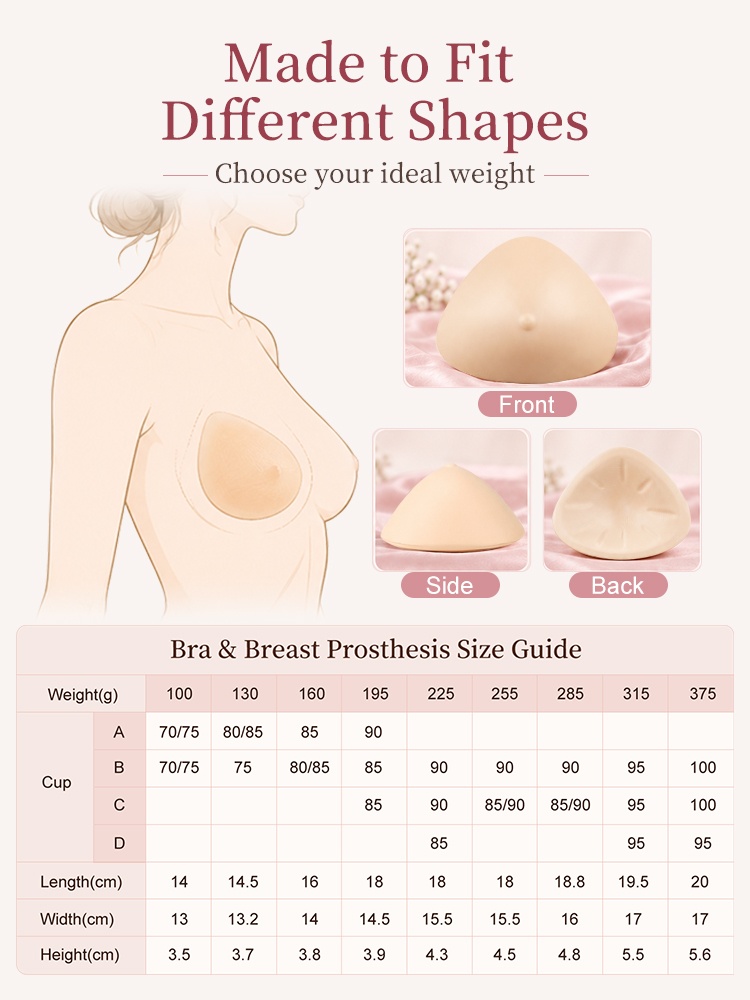
To make the terminology more concrete, VEIMIA currently offers the following silicone breast form as one example of a longer-term external option. It is not intended to represent the best choice for every body or every stage of recovery.
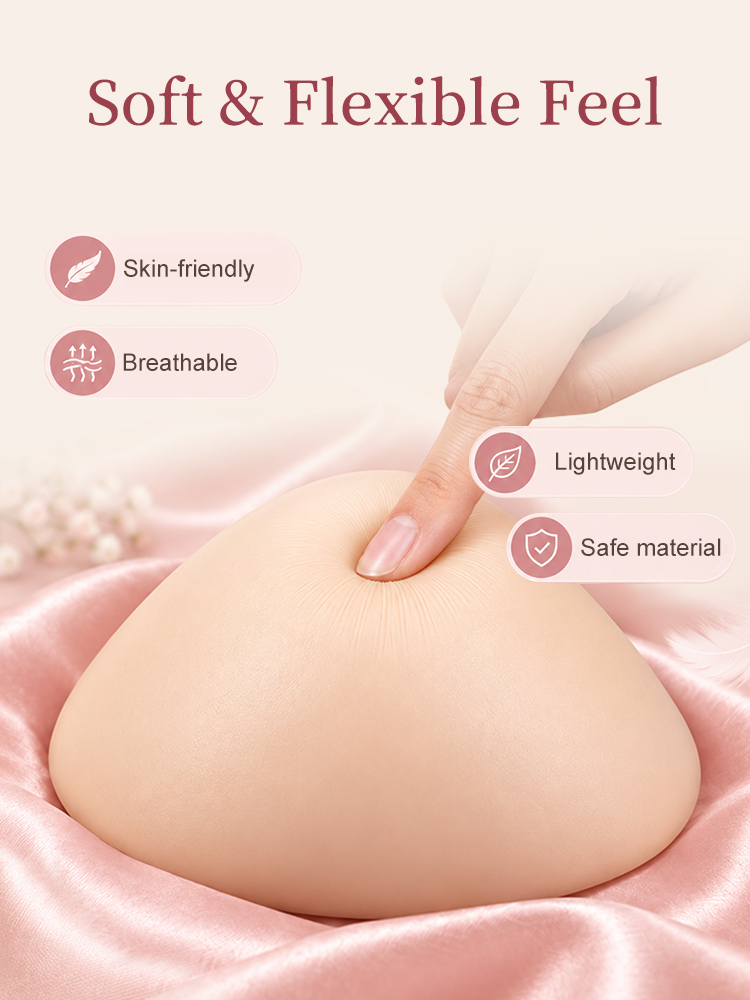
VEIMIA Silicone Breast Prosthesis
A silicone breast form with a left-right universal shape, currently offered in multiple listed weights for different fit preferences.
Current SG listing: S$89
- Silicone construction
- Left-right universal design
- Listed sizes from 100g to 375g
- Designed for external everyday wear
This is one available silicone option, not a substitute for professional fitting or individual medical advice. Price and availability may change.
View This Silicone OptionBreast Prosthesis Care & Everyday Use
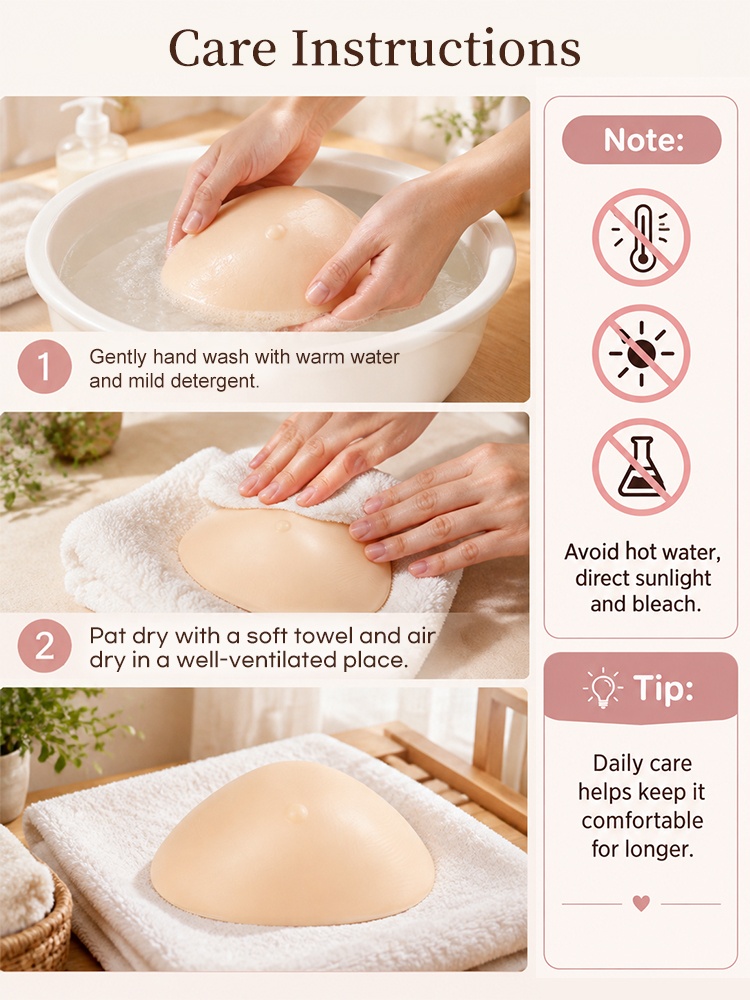
A breast form sits close to the skin and may be worn for many hours, so routine care matters.
Always follow the instructions supplied with your particular prosthesis, because materials and surfaces differ.
For many silicone forms, general care involves gentle washing, careful drying and protecting the outer surface from damage.
Clean according to the manufacturer's directions, commonly using warm water and a mild cleanser.
Use a soft towel or follow the supplied drying instructions rather than exposing the form to unnecessary heat.
Keep the form away from sharp jewellery, pins or other objects that may puncture its outer layer.
What about heat, swimming and travel?
A standard breast form is not automatically a swim form. If you plan to swim regularly, look for a design intended for pool or seawater use.
For travel, a breast form can usually remain part of your normal packing or dressing routine. Protect it from sharp objects inside luggage and use its storage case if one is provided.
If a breast form starts feeling different, moving more than before, or no longer matching your clothing in the way you want, that does not necessarily mean you have done anything wrong.
Bodies change.
Weight changes. The remaining breast can change. Bras stretch. Activity levels change. Preferences change.
A reassessment or a different form may simply be appropriate.
Breast Prosthesis Types Compared
| Type | Main idea | When it may be considered |
|---|---|---|
| Full form | Replaces the contour of an entire breast. | Common after mastectomy when breast shape is wanted under clothing. |
| Partial form | Adds volume to only part of the breast outline. | After partial breast surgery or when someone wants to balance asymmetry. |
| Silicone form | Soft moulded silicone construction available in different shapes and weights. | Often used as a longer-term everyday breast form once healing allows. |
| Lightweight form | Reduces overall weight using lighter construction or materials. | May suit someone who finds full-weight forms uncomfortable or prefers less weight. |
| Temporary soft form | Very lightweight, often fabric-covered. | Early recovery while the surgical area is healing. |
| Swim form | Designed specifically to tolerate swimming conditions. | Pool, spa or seawater use when the manufacturer indicates it is suitable. |
From the VEIMIA Pinkbook Breast Care Series
→ Do I Need a Breast Prosthesis After Mastectomy? → Pocketed Mastectomy Bra Guide → Mastectomy Bra vs Regular BraBreast Prosthesis & Breast Forms: Frequently Asked Questions
What is a breast prosthesis?
A breast prosthesis is an artificial external breast form that replaces the shape of all or part of a breast after tissue has been removed. It can usually be worn inside a bra or another supportive garment.
Is a breast form the same as a breast prosthesis?
Yes, in most post-mastectomy contexts the terms breast form and breast prosthesis describe the same type of external breast shape. A breast prosthesis is different from a surgically implanted breast implant.
What is a partial breast prosthesis?
A partial breast prosthesis adds volume to only part of the breast outline rather than replacing the contour of an entire breast. It may be used after partial breast surgery or to adjust asymmetry.
What is a silicone breast prosthesis?
A silicone breast prosthesis is an external breast form made with soft silicone material and moulded into a breast shape. Silicone forms are available in different shapes, profiles, weights and sizes.
Are lightweight breast forms better than full-weight forms?
Neither is automatically better. Some people prefer a lighter form for comfort, warm weather or activity, while others prefer more weight. Fit, movement, clothing and personal comfort are more useful considerations than weight alone.
When can I wear a breast form after mastectomy?
A soft lightweight temporary form may be used during early recovery if appropriate. A longer-term fitted prosthesis is generally considered after the surgical area has healed sufficiently and swelling has settled. Follow your breast care team's advice for your own recovery.
Do I need a pocketed bra for a breast prosthesis?
Not always. Some breast forms can be worn inside a suitably supportive regular bra. A pocketed bra has an internal pocket that can help hold the breast form securely and separate it from the skin.
How should a breast prosthesis fit?
A breast prosthesis should feel comfortable, remain reasonably secure as you move, and create a shape you are comfortable with under clothing. Size, projection, weight and bra fit can all influence the result.
Can I wear a breast form only sometimes?
Yes. A breast form does not have to be worn every day. Some people use one for specific clothing, work, exercise or social occasions and choose to go without it at other times.
How do you care for a silicone breast prosthesis?
Follow the care instructions provided with your specific product. Many silicone forms are gently cleaned with warm water and mild cleanser, dried carefully and stored away from sharp objects and excessive heat.
Medical note: This article provides general educational information about external breast prostheses and breast forms. Healing, prosthesis timing, skin sensitivity, radiotherapy and individual fitting needs vary. Speak with your breast care nurse, prosthesis fitter or healthcare team about options appropriate to your own surgery and recovery.
```