Bra Cup Measurement at Home: How to Measure Bra Cup Size in SG/MY | Cara Ukur Saiz Bra di Rumah
Here’s the simplest answer: your bra size is made up of band size + cup size. To find it at home, measure your underbust first, then measure your bust / overbust, and compare the difference. That difference points to your cup, while your underbust gives you the band. If you’ve ever asked “How do I measure my breast cup size?” or cara ukur saiz bra macam mana?, this guide walks you through it in a clear SG/MY-friendly way—especially if you only know 34, 36, 38 and are not sure how that connects to 75, 80, 85.
What you need before measuring
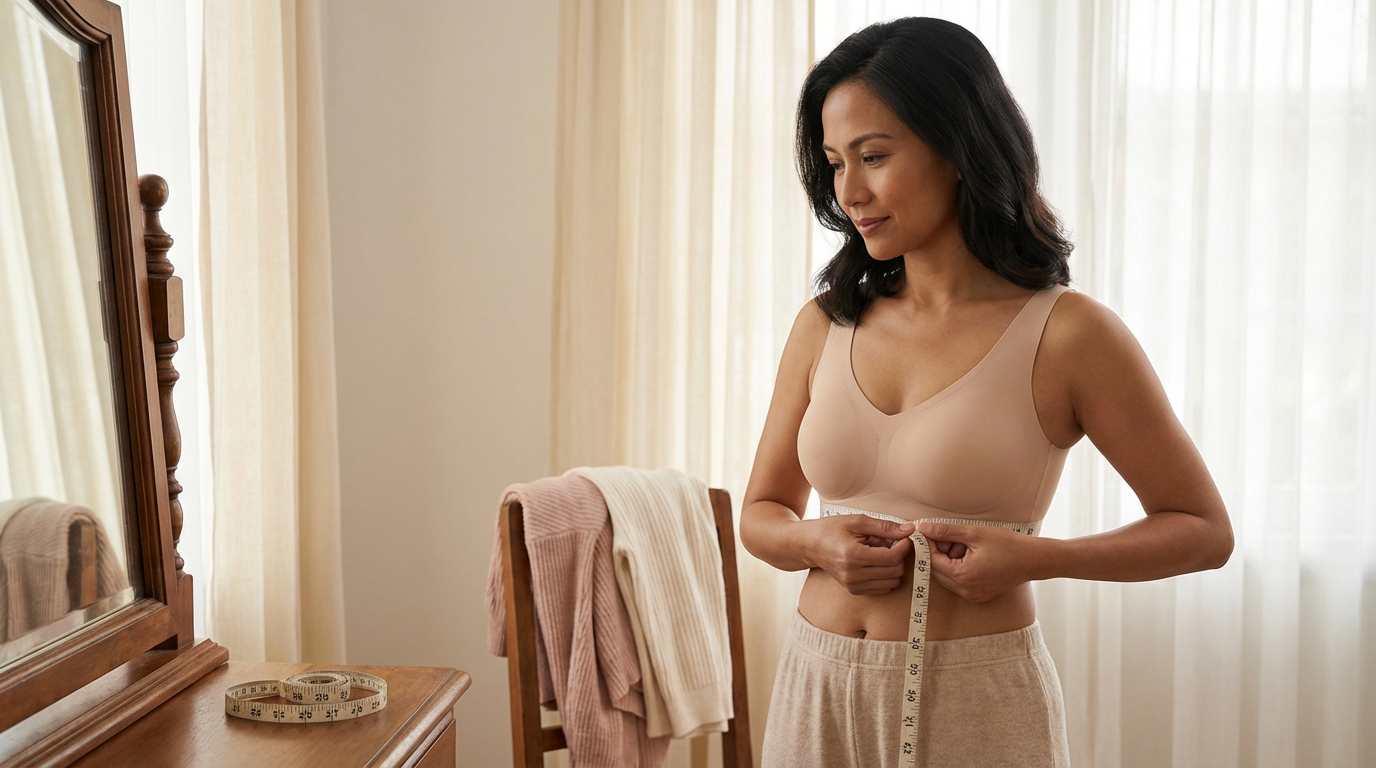
You do not need a fitting room, special app, or complicated calculator to get a useful starting size. At home, the goal is not lab-perfect precision. The goal is to get close enough that your next bra actually fits better than guessing.
- A soft measuring tape. A fabric tape is easiest because it follows your shape without digging in.
- A non-padded bra, thin bralette, or bare bust. Thick padding can change your bust measurement and confuse the result.
- A mirror. This helps you check that the tape stays level and does not slide up at the back.
- Your phone notes or a piece of paper. Write both numbers down in cm first. That is usually the easiest format for SG/MY size guides.
- Two extra minutes. Measure twice, and if the numbers are different, do a third round and use the average or the one that feels most consistent.
If your breasts are fuller, softer, or sit lower, do not worry. You can still measure yourself accurately at home. The main thing is to keep the tape level and not squeeze.
Step 1 — Measure underbust correctly
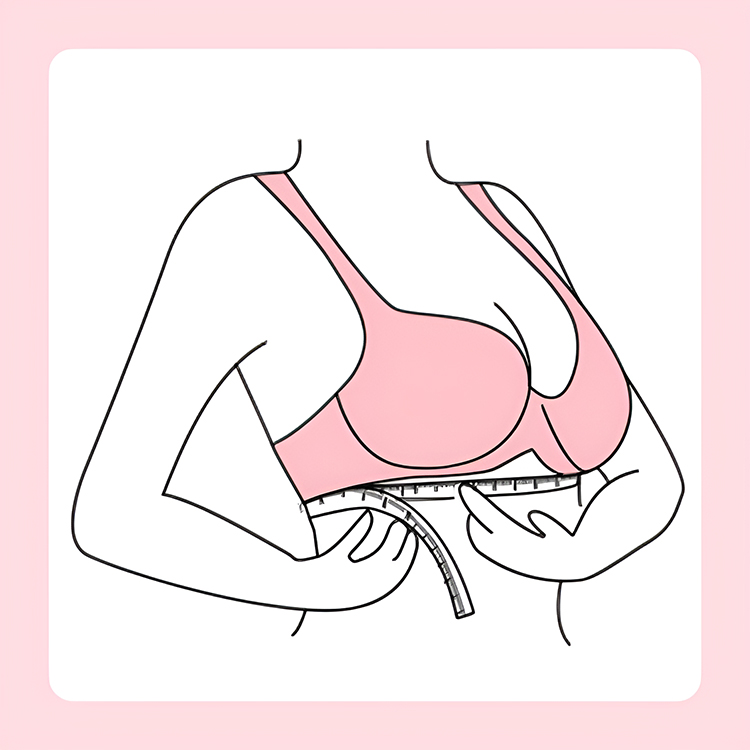
Your underbust is the measurement around your ribcage, directly under your breasts. This is the number that helps determine your band size—the 75, 80, 85 or 34, 36, 38 part.
How to do it
- Stand upright in a relaxed posture.
- Wrap the tape directly under the bust, close to the skin.
- Keep it horizontal all the way around. The back of the tape should not climb upward.
- Pull it snug, not painful. Think “secure” rather than “tight.”
- Breathe out naturally, then read the number.
If the tape feels loose enough to slide around, the band result may come out too big. If you pull so hard that the tape compresses your ribs, the band result may come out too small. A good underbust reading should feel close and supportive, the same way a comfortable bra band should feel.
A useful trick: take one snug reading and one slightly relaxed reading. If they are very close, great. If they are far apart, measure again until you get a repeatable number.
What to write down
Write your underbust in centimetres first. For example: 76 cm, 81 cm, or 85 cm. This makes local conversion easier later, especially if you shop on a mix of SG/MY, EU-style, and UK/US-style size labels.
Step 2 — Measure bust / overbust correctly
Your bust or overbust is the measurement around the fullest part of your breasts. This is the number people often call “measure boob size,” but on its own, it still does not tell you your bra size. You need it together with underbust.
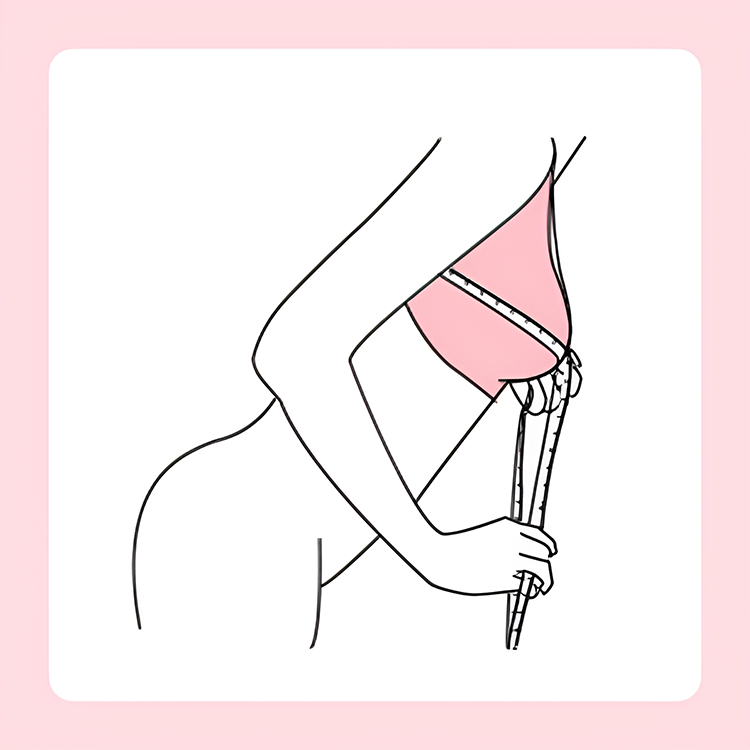
How to do it
- Lean your upper body forward slightly—around 45 degrees is a good guide.
- Wrap the tape around the fullest part of your bust.
- Keep the tape level and lightly touching the body.
- Do not press down and flatten your bust.
- Read the number in cm and write it down.
That slight forward lean matters more than many people realise. It helps gather breast tissue more naturally, especially if your shape is softer, fuller at the bottom, or affected by age, weight changes, or breastfeeding history. If you stand very upright and measure too tightly, your cup estimate may come out smaller than what actually feels comfortable in a bra.
If one breast is visibly larger than the other, measure to the fuller side. It is usually easier to fit the fuller breast properly, then adjust the smaller side with strap tension or removable padding if needed.
How to calculate cup size simply
Now for the part that makes everything click: cup size is based on the difference between your bust and underbust measurement.
Simple formula:
Overbust − Underbust = Cup difference
Once you get the difference, match it to a cup range. A practical SG/MY-friendly reference looks like this:
| Cup | Difference in cm | Difference in inches | What it means |
|---|---|---|---|
| A | 7.5–10 cm | 3–4" | A smaller difference between bust and underbust. |
| B | 10–12.5 cm | 4–5" | Often a common starting range for everyday bras. |
| C | 12.5–15 cm | 5–6" | A moderate cup difference. |
| D | 15–17.5 cm | 6–7" | A fuller cup difference. |
| E | 17.5–20 cm | 7–8" | More projection or fullness. |
| F–G | 20–25 cm | 8–10" | Fuller cup ranges that benefit from support-focused fit checks. |
Example 1
If your underbust is 76 cm and your bust is 88 cm, the difference is 12 cm. That puts you around a B cup. Your band is likely around 75 / 34, so your starting point would be 75B / 34B.
Example 2
If your underbust is 81 cm and your bust is 94 cm, the difference is 13 cm. That points to a C cup. Your band is likely around 80 / 36, so your starting point would be 80C / 36C.
This is why bra size is never just the number, and never just the letter. You need both parts together. “I’m a 36” is incomplete. “I’m a C cup” is also incomplete. The real fit lives in the combination.
Common mistakes SG/MY women make
This is the section that saves the most frustration. Many local shoppers do measure, but still end up with the wrong result because one of these common habits gets in the way.
1) Only looking at 34 / 36 / 38
This is probably the most common SG/MY confusion. Someone says, “I wear 36,” but what they really know is only the band family. Without the cup, there is still a huge difference between 36A, 36C, and 36E. If you shop only by the number, you are still mostly guessing.
2) Thinking chest measurement = bra size
Your full bust measurement is not your bra size. Your underbust measurement is not your bra size either. You need both. Chest circumference alone cannot tell you whether the cup is right.
3) Measuring over a padded bra or thick clothing
Padding can make your bust measurement look larger. A bulky shirt can shift the tape and make the numbers inconsistent. Measure over a thin, unpadded bra or directly on the body whenever possible.
4) Letting the tape ride up at the back
If the back of the tape sits higher than the front, the reading is off. This happens a lot when people measure alone in a rush. Use a mirror. It makes a bigger difference than most people expect.
5) Pulling the tape too tight over the bust
Many women flatten the bust without noticing. That makes the cup result smaller than it should be. The tape should touch the body, not press the tissue down.
6) Assuming the cup letter is an absolute size
This one is subtle but important. A 34C and a 38C do not fit the same way, even though both say “C.” The band changes the overall scale of the bra. That is why cup letters should always be read together with the band.
7) Sticking to a size from years ago
Body shape changes. Weight fluctuates. Hormones shift. Age, exercise, pregnancy, breastfeeding, and even posture can change how a bra sits. If your bras suddenly feel tight, loose, or odd in the cup, it is worth remeasuring instead of assuming the brand changed.
Inch vs cm conversion for local shoppers
If you shop across Singapore, Malaysia, and international marketplaces, you will often see two systems used side by side. One uses labels like 75 / 80 / 85. Another uses 34 / 36 / 38. That is why bra shopping can feel confusing even when the fit itself is not.
The good news: these size families are often direct equivalents. A simple local guide looks like this:
| Underbust range | EU-style / local band | UK/US-style band | What shoppers often say |
|---|---|---|---|
| 63–67 cm | 65 | 30 | “I wear a 30 band.” |
| 68–72 cm | 70 | 32 | “I wear a 32 band.” |
| 73–77 cm | 75 | 34 | “I wear 34.” |
| 78–82 cm | 80 | 36 | “I wear 36.” |
| 83–87 cm | 85 | 38 | “I wear 38.” |
| 88–92 cm | 90 | 40 | “I wear 40.” |
So yes, 75 usually maps to 34, 80 to 36, and 85 to 38. But remember: that only solves the band language. You still need the cup.
Quick answers: 34/36/38 and 75/80/85
If you want the fastest possible answer for local shopping, start here:
Now add the cup letter based on the difference you measured. For example:
- 34B means a 34 / 75 band with a B-cup difference.
- 36C means a 36 / 80 band with a C-cup difference.
- 38D means a 38 / 85 band with a D-cup difference.
That is also why saying “I’m between 34 and 36” usually means you need to look more closely at your actual underbust number, how firm you like your band, and how stretchy the bra fabric is.
What to do if you are between sizes
This is where bra fitting becomes real life instead of pure math. Your measured size is a starting point, not a prison.
If your cup difference falls between two cup ranges
Choose the larger cup as your first try-on size. That is usually the safer choice when the number sits right on the border, especially if you dislike spillage, cutting in, or a compressed silhouette.
If your underbust sits between two bands
Think about your comfort preference and the bra style:
- Choose the firmer/smaller band if you want more hold and the fabric is very stretchy.
- Choose the slightly looser/larger band if you are sensitive around the ribs, fluctuate during the month, or want a softer everyday fit.
If the band feels right but the cups cut in
Go up in cup first.
If the cups feel fine but the band rides up
Go down in band first, then reassess the cup.
If you are buying a seamless everyday bra
Prioritise comfort, smoothness, and flexible fit. A seamless style is often easier as a first purchase after measuring because it is forgiving, light under clothes, and easier to wear day to day while you confirm whether your starting size feels right in motion.
Continue reading after this guide:
34B, 36B, 34C, 38B… explained
B vs C vs D Cup: what really changes
Can I Wear a Seamless Bra Every Day?
VEIMIA Size Guide
FAQ
How do I measure my breast cup size at home?
How do I know my bra size if I only know 34, 36, or 38?
How do I measure my breast cup size without going to a store?
Cara ukur saiz bra macam mana?
Is cup C always bigger than cup B?
What if one breast is larger than the other?
Should I measure in inches or centimetres?
How often should I remeasure my bra size?
What is the most common mistake when doing bra cup measurement?
What to choose after measuring
Once you have a starting size, the best next step is usually not a highly structured or complicated bra. It is often smarter to begin with a clean, forgiving everyday style that helps you test your fit in real life—under a T-shirt, at work, while moving around, and through a normal humid day in SG/MY weather.
A seamless bra is a gentle place to start because it is easier to read the fit. You can quickly tell whether the band sits right, whether the cups feel smooth, and whether the shape works under light clothing.
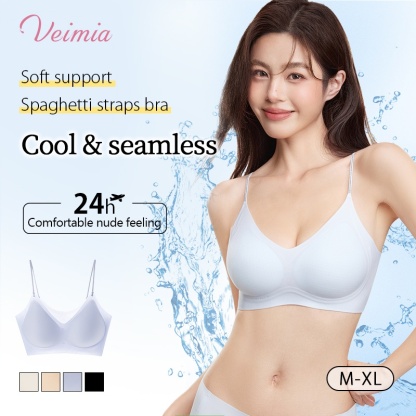
VEIMIA Cooling Seamless Bra
A strong starter style after measuring: smooth under lightweight tops, breathable for warm weather, and soft enough for everyday wear while you confirm your best fit.
Best for shoppers who want a clean, easy first purchase after using a size guide. Regional pricing and availability may vary.
A soft next step if you are ready to shop
Because this article is measurement-first, we have kept promotions out of the main teaching flow. But if you are ready to compare styles after finding your starting size, the seasonal VEIMIA spring event is a neat place to browse everyday bras, seamless styles, and warm-weather staples without losing the sizing context you just worked out.
Spring Renewal Sale
Refresh your everyday drawer with light, wearable essentials after you confirm your bra cup measurement.
Offer visuals and benefits may vary by region or cart conditions.